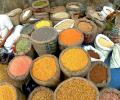
On a day when several mandis across the country are closed in protest against the recent Centre's decision to impose stringent stock-holding limit on pulses, the government clarified that limits have been defined as retail prices are still higher than last year though there is some moderation in the last few weeks. It said the same logic also holds true for edible oils, the import duties on which was slashed few days back and curbs lifted on import of refined oils. The decision on edible oil and pulses have caused massive resentment among the trading community as it came just ahead of the kharif sowing season, when prices were off their peaks due to multiple steps announced previously. Sources said trading activity in some of the major mandis dealing in pulses such as Sholapur, Amravati and Latur in Maharashtra, Indore and Dewas in Madhya Pradesh along with Kanpur in Uttar Pradesh was impacted as traders went on a flash strike in protest against the decision to impose stock limits.

As many as 81 per cent people support having rules for consumer e-commerce, but want more services-based platforms to have more clearly defined roles, a survey by community social media platform LocalCircles has found. The survey asked respondents to answer questions based on the recent draft Rules proposed by the ministry of consumer affairs. The responses found 81 per cent consumers wanting sales of products and services over electronic or digital networks to be governed by a set of electronic commerce rules.

Facebook removed 25 million pieces of content identified as 'spam,' 1.8 million pieces of content containing 'adult nudity and sexual activity', reports Neha Alawadhi.
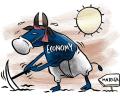
For the second month running, the demand for work under the flagship MGNREGA scheme has been lower than in 2020, which was an extraordinary year for the scheme. Latest data shows that around 35.1 million households have sought work under MGNREGA this June, or 21.48 per cent lower than the number that had sought work in the same month of 2020. This May, some 27.6 million households had sought work under the scheme, or 26.01 per cent lower than the same month last year.

From Twitter to Facebook to Spotify, everyone it seems is clambering aboard the social audio bandwagon. Neha Alawadhi reports.

India's consumer digital economy which was pegged at $85-90 billion in calendar year 2020, is expected to become a $800 billion market by 2030, according to reports released by consulting firm RedSeer at its flagship event Ground Zero 5.0. The digital economy includes 60 per cent of travel, 40 per cent non-grocery retail, 30 per cent of education, 25 per cent of food and beverages services and 6 per cent of pharma/grocery going through digital channels by calendar year 2030. Online retail is set to become the third-largest market by scale by CY30 with an annual gross merchandise value (GMV) of $350 billion in CY30, said RedSeer.

While Facebook said on Tuesday it will publish an interim report on July 2 as mandated by the IT rules, Google will publish its transparency report as required under the new IT Rules in India.

With rainfall and monsoons becoming highly unpredictable partly due to climate change and partly due to usual changes in weather patterns, it is such innovations by IMD which will help in planning better, reports Sanjeeb Mukherjee.

The submission was made by the UN Special Rapporteurs on the promotion and protection of the right to freedom of opinion and expression Irene Khan; on the rights to freedom of peaceful assembly and of association Clement Nyaletsossi Voule; and the right to privacy, Joseph Cannataci.

According to the latest report from Stranded Workers Action Network (SWAN), a voluntary effort started in March 2020 to mobilise relief for stranded migrant workers, almost 92 per cent workers, whom the group contacted between April 21 and May 31, had not received any money from their employer. This was after restrictions were imposed and work had stopped. The survey, which was conducted among 1,396 worker groups, adding up to 8,023 people that included 4,836 women and children, showed that 76 per cent of the workers had less than Rs 200 left with them.

As India looks to mend its Covid-battered economy, one thing that will grab the attention of all concerned is the path that both wholesale and retail inflation will follow. Even the Reserve Bank of India in its latest policy statement said, "Going forward, the inflation trajectory is likely to be shaped by uncertainties impinging on the upside and the downside.

Intelligent tools are being deployed to detect content pirated from OTT platforms.

Paytm will look to raise up to $1.5 billion as part of primary share sale, leading up to its initial public offering (IPO), which is planned for November, a person familiar with the developments said. The company is looking to file its draft red herring prospectus (DRHP) by July, according to sources. According to this person, though the details of the listing are being worked out, Paytm may take the qualified institutional buyer (QIB) route to list and issue fresh equity to raise funds.

As it readies for its initial public offering (IPO) later this year, digital payments firm Paytm is honing its strengths to remodel itself from being a payment wallet to becoming a financial services provider, and is working towards narrowing its losses, evident from its most recent Annual Report. Unlike many of its peers, Paytm has started expanding its merchant payment ecosystem. It has realised that though it can take the maximum share of the Unified Payment Interface (UPI) transactions, from a revenue generation point of view it will not have any impact.

Zerodha will not raise external funds now or in the future, because it is profitable and has zero debt.

Digital payments provider Paytm is all set to make its market debut as early as this year, with an aim to raise $3 billion (around Rs 22,000 crore). If successful, this could be the biggest initial public offering (IPO) by an Indian company, breaking Coal India's 2010 record of Rs 15,475 crore. According to media reports, the board of One97, parent company of Paytm, is all set to meet this Friday to formally approve the IPO plan.

The cover provided under the Centre's Pradhan Mantri Suraksha Bima Yojana, which is a vital safety net for them, ended almost a year back on May 31, 2020. Ever since, there hasn't been much progress on the higher insurance coverage of Rs 5 lakh promised under the newly launched Pradhan Mantri Matsya Sampada Yojana, reports Sanjeeb Mukherjee.

As the deadly second wave of the Covid-19 pandemic rages on, startups and technology firms are realising the burnout effect it is having on employees. Many have shortened their work weeks to four days, while others have made provisions for more time off for employees to help them rejuvenate or care for loved ones.

The US government has removed a regulation proposed by former president Donald Trump's administration that sought to narrow the definition of "specialty occupation" under the H-1B visa regime. The change comes as a relief for Indian information technology firms, which are among the largest users of such visas. "The Department of Homeland Security (DHS) has formally vacated a regulation that would have redefined the H-1B specialty occupation, restricted off site placement of H-1B employees, and otherwise increased employer compliance obligations. "The vacatur follows a federal court ruling that set aside the regulation because the agency did not have good cause to bypass notice and comment rulemaking, in violation of the Administrative Procedures Act," explained immigration law firm Fragomen.

As India looks to scale up use of technology in agriculture, a recent study has found that with just 2 per cent of the cultivators in India using mobile applications for farm-related activities and real-time alerts, adoption of tech solutions such as Internet of Things (IoT) remains at a nascent stage. It also found almost 90 per cent of the existing start-ups and tech-based companies have solutions that are focused only on pre-harvest operations and not on post-harvest which has a higher investment potential due to the presence of big companies. In post-harvest operations, the study, Titled, IoT Adoption in Indian agriculture, that was conducted by industry body Nasscom along with Cisco India among more than 180 enterprises and 40 agritech start-ups found that unclear Return on Investments (RoI) is a big stumbling block for adoption of tech solutions like IoT.
 © 2026 Rediff.com - Advertise with us - Disclaimer - Privacy Policy - Sitemap - Feedback - About us - Terms of use - Grievances